Monday, January 21, 2013

Dispensaries Still Under Fire By City Attorney

Several news sources outline the continuing saga of litigation towards medical marijuana dispensaries and co-operatives. 

THURSDAY, JANUARY 17, 2013

San Diego City Attorney Jan Goldsmith Refuses Closure of Medical Marijuana Dispensary Cases, Sends Misleading Letter to Litigants, Mayor and City Council

By Terrie Best, San Diego ASA Court Support Coordinator
San Diego – City Attorney Jan Goldsmith dashed off a letter to litigants in medical marijuana dispensary cases indicating he is not answerable to his client the Mayor and manufacturing mistruths, in what appears an attempt to make the procedure the punishment in twelve medical marijuana dispensary zoning cases.

Last week in a dramatic move, newly elected San Diego Mayor, Bob Filner presumably put an end to the investigation and persecution of medical cannabis dispensaries by the city’s Neighborhood Code Compliance.  Additionally, Mayor Filner directed the City Attorney, Jan Goldsmith to drop twelve pending civil suits against medical cannabis dispensary operators for zoning code violations. These suits relied heavily on testimony from code enforcement officers and, by his own admission, without this testimony Goldsmith has no standing to pursue the cases. 

Additionally, The California Supreme Court Ruled on Dispensary Ruling

California Supreme Court Denies Review of Medical Marijuana Case, Affirms Legality of Dispensaries

High Court also denied depublication of People v. Jackson despite request from League of California Cities
SAN DIEGO, CA — The California Supreme Court denied review yesterday of a landmark medical marijuana dispensary case, which drew widespread attention from prosecutors and policymakers across the state.
Jovan Jackson
Jovan Jackson
The Fourth District Court of Appeal for California issued a unanimous published ruling on October 24th in the case of People v. Jackson, reversing the conviction of former San Diego dispensary operator Jovan Jackson and establishing a clear defense for Jackson and other medical marijuana providers similarly prosecuted in state court.
Notably, however, the State Supreme Court took decisive action yesterday in the way that it did, despite requests to depublish the appellate court decision from the League of California Cities and an amicus brief supporting the High Court’s review of the case from district attorneys in Los Angeles, Sacramento, and Sonoma Counties, as well as the Los Angeles City Attorney.
“Not only has the California Supreme Court rejected attempts to have it review the Jackson case, thereby affirming the legality of medical marijuana sales and distribution in the state, it also chose not to depublish this landmark ruling benefiting thousands of patients,” said Joe Elford, Chief Counsel with Americans for Safe Access, who represented Jackson in his appeal. “Even though the appellate court decision garnered significant opposition, patients have prevailed in their struggle to protect safe access to medical marijuana.”
Jackson was convicted in September 2010 after being denied a defense in San Diego Superior Court. However, yesterday’s decision not to review his case now entitles Jackson — and, by extension, other California dispensary operators — to a defense in state court. By rejecting the Attorney General’s argument that patients who utilize dispensaries must collaborate, or ‘come together’ in ‘some way’ to cultivate the marijuana they purchase, the appellate court ruling provided the elements for a defense in future jury trials across the state.


Friday, January 11, 2013

Mayor Filner Recinds War On Dispensaries

Mayor Bob Filner has asked Jan Goldsmith, City Attorney, to cease prosecuting city medical marijuana dispensaries and collectives. This story has been well covered by news outlets across California.

KPBS;

San Diego CityBeat;

SD Chapter of Americans for Safe Access

Medical Marijuana Business Daily

The Medimar Clinic operator maintains a database of operating dispensaries. Call 877-627-1644  or 213-675-0765

Wednesday, January 2, 2013

Lawful Medical Marijuana Patients Can Lose Child Custody Battles, But It’s Getting Better

Smell the Truth Repost

Divorces can be plenty messy to begin with. Add in a few kids, some run of the mill vindictiveness and a medical marijuana recommendation – and it can become a nightmare.

Comedian, writer and Sacramento News and Review columnist Ngaio Bealum tries to provide some clarity on the issue this week, writing that California courts are starting to go easier on pot-smoking parents.
Keep away from child custody disputes: a Kiva medical cannabis bar
“Recently, the California Courts of Appeal found that someone using marijuana did not automatically mean someone was abusing marijuana. In this case, the father (known as “Paul M.” in court records) had a recommendation for medical cannabis, and would medicate in a shed outside of the house while an adult family member watched his child. The cannabis was also kept in a locked box in the shed. Originally, the Los Angeles Department of Children and Family Services had ordered the father to take random drug tests, and the lower court agreed, but the appeals court reversed that decision, stating, ‘both DCFS and the trial court apparently confused the meanings of the terms ’substance use’ and ’substance abuse.’’ As it stands now, medical cannabis is being treated more and more like a regular prescription and less like a criminal offense. If you take the necessary precautions, there is no reason for you to lose custody of your kids over your cannabis use. Good luck.”
If you’re growing it in the same house with kids – watch out. And we would add that Child Protective Services reacts differently in every California county to adult medical marijuana use. Responsible use of the medication in San Francisco might not be an issue, whereas a parent using medical marijuana in Modoc County might still be in for a world of hurt.
Read Sacramento News & Review’s ‘Custody and pot’ here.
This article is not the opinion of Medimar and we only repost it for the service of our patients. Medimar  holds no opinion on this subject.

Saturday, December 22, 2012

Teen Marijuana Use May Show No Effect On Brain Tissue, Unlike Alcohol, Study Finds


December 22, 2012

los-angeles

Teen Marijuana Use May Show No Effect On Brain Tissue, Unlike Alcohol, 

Study Finds


A teen who consumes alcohol is likely to have reduced brain tissue health, but a teen who uses marijuana is not, according to a new study.
Researchers scanned the brains of 92 adolescents, ages 16 to 20, before and after an 18-month period. During that year and a half, half of the teens -- who already had extensive alcohol and marijuana-use histories -- continued to use marijuana and alcohol in varying amounts. The other half abstained or kept consumption minimal, as they had throughout adolescence.
The before-and-after brain scans of the teens consuming typically five or more drinks at least twice a week showed reduced white matter brain tissue health, study co-author Susan Tapert, neuroscientist at University of California, San Diego, told HuffPost. This may mean declines in memory, attention, and decision-making into later adolescence and adulthood, she said.
However, the level of marijuana use -- up to nine times a week during the 18 months -- was not linked to a change in brain tissue health. The researchers did not test performance; they only looked at brain scans.
The study was conducted by researchers at UC San Diego and is scheduled to be published in the April issue of the journal Alcoholism: Clinical & Experimental Research.
The damage occurs because white matter brain tissue develops throughout adolescence and into a person's 20s, Joanna Jacobus, postdoctoral fellow at the UC San Diego, and co-author of the study, told HuffPost.
Part of that still-developing brain tissue is where decision-making ability comes from, which can exacerbate substance use. "It becomes a cycle. If teens decrease their tissue health and cognitive ability to inhibit themselves, they might become more likely to engage in risky behavior like excessive substance use," Jacobus said.
While studies showing the deleterious effect of alcohol on adolescents and adults have been more consistent, studies of the effect of marijuana have not, Tapert said. "One reason is that marijuana can really vary. Different strains contain different levels of THC and other marijuana components. For example, some studies have suggested one component, cannabidiol, may actually have neuroprotective effects," she said.
The researchers are not sure why alcohol had an effect and marijuana did not. They said the study results cannot be considered definitive without more research. They also said they do not know if the reduced brain tissue health is permanent.
Still, Duncan Clark, a medical doctor who was not involved in the study and who studies teen substance abuse, said the study is valuable because similar research has only conducted a one-time test instead of tests before and after a period of substance use.
Clark, associate professor of psychiatry at the University of Pittsburgh Medical Center, said that because white matter brain tissue development may be the basis for greater self-control, researchers hope to be able to eventually use brain scans like those in this study to predict young individuals' likelihood of substance abuse.
Because the researchers followed the subjects for 18 months, they were able to at least partially monitor preexisting differences in the two groups. But Jacobus conceded that eliminating other factors -- such as genetics, home environment, and even minimal use of other drugs -- is very difficult.
Each teen in the study received brain imaging, a detailed substance-use assessment, and toxicology screening at the beginning of the study and at the end of the study -- as well as substance-use interviews every six months.
Tapert led another study published in 2009 that looked at people ages 12 to 14 before and after they started to drink. Tapert's team found poorer performance on tests of thinking and memory in the teens who had begun to drink. The researchers reported that alcohol particularly compromised boys' attention span, and girls' comprehension and interpretation of visual information.
While this latest study examines marijuana's effect on physical brain tissue, a Duke University study earlier this year examined the drug's effect on intelligence and performance. That study found that teens who routinely smoke marijuana before turning 18 risk a long-term drop in their IQ.
Teen use of marijuana continues to be high, while teens' perception of the drug's harmfulness is down, according to a University of Michigan study published Wednesday. Nearly 23 percent of high school seniors polled in the study said they had smoked marijuana in the month prior.
"It is clear that more research is needed into the long-term effects of marijuana on the brain," Tapert said. "Especially because use is up."


Friday, December 21, 2012

Is America's Attitude Towards Marijuana Shifting?

Since the election on Nov. 6, when San Diego voters chose a new mayor, patients in the medical marijuana arena are hoping the local landscape and political views towards the medical marijuana industry may be changing. Our local authorities can certainly see the mindset shifting across America as various states approved medical marijuana use and removed penalties for possession of small quantities.

An informative show covering the topic was aired on Dec 9 on MSNBC's The Melissa Harris-Perry Show, Is the War on Drugs Going to Pot?

Additional insightful opinions can be found on "The Dish" by Andrew Sullivan, at The Daily Beast.

Opinions from both sides of the argument are abundant. America may just be opening a dialogue on the negative effects of including marijuana as a Class A narcotic. Generations ago we decided not to include alcohol and tobacco in that class. WHY? America tried abolition and reversed that decision because of the negative effects on society, creating criminals and government with the loss of tax dollars. "Lets not anyone be fooled; tobacco is the true gateway drug!" Yet being part of the reason for the establishment of America, tobacco has a good standing in America's culture. What would our society be like if Columbus brought back marijuana?
Medimar doesn't condone either side of the debate; only for citizens to read, learn and make their own decisions. We invite your opinion on this topic.

"Teen Pot Use Stalls" Study Shows


Teen Pot Use Stalls as States Continue to Regulate Use

  • by Sabrina Fendrick, NORML Women's AllianceDecember 20, 2012
    Despite several attempts by the media and policy makers to associate the rising number of state regulated medical marijuana programs (and popular legalization efforts) with a rise in use and a drop in associated risk, the 2012 Monitoring the Future Survey reports that there was no rise in daily or annual marijuana use among teens.  According to the report, “annual marijuana use [among 8th, 10th and 12th graders] showed no further increase in any of the three grades surveyed in 2012… [And the] daily use of marijuana…remained essentially flat.”  Also of note, despite the sharp decline in perceived risk of marijuana use across all three grades, there was a statistically significant decline of use among 8th graders.   These numbers are consistent with other recent studies showing that states with regulated marijuana programs have not seen an increase in teen use. Some have even seen a decrease in pot use among their youth population.
    “This study suggests that exposure among teens to the concept of marijuana regulation policies (one third of whom live in such states) does not cause an increase in use. It is also important to consider that a drop in perceived risk is likely associated with their rejection of the overzealous scare tactics used in most schools’ drug education programs” said Sabrina Fendrick of the NORML Women’s Alliance.
    It is important to note, however, that marijuana use rates and availability nationwide remain at relatively high levels, while alcohol use rates remain historically low.  This is most likely due to the fact that the former is illegal and thereby not subject to government controls, while the latter substance is legally restricted to adults only. The same goes for tobacco. We did not have to outlaw cigarettes to reduce the use among minors. A policy of education and regulation (not prohibition) has created an environment in which cigarette usage has fallen to an all time low.  According to the principal investigator of the study, Lloyd Johnston, “[A] lowering teen smoking rates…likely…depend[s] on…changes such as raising cigarette taxes, further limiting where smoking is permitted, bringing back broad-based anti-smoking ad campaigns, and making quit-smoking programs more available.”  It has been proven that age restrictions, coupled with the imposition of government regulation and education are the most effective at reducing youth access to adult-only recreational substances.  According to the 2011 MFS report, the drop in alcohol use can be attributed to a strict regulation scheme that include educational campaigns focusing on responsible use and age restrictions which, in turn, lowers availability.
    The report concluded; “In the 1980’s a number of states raised their minimum drinking age to twenty-one, which these researches were able to demonstrate reduced drinking.”  It goes on to say “the proportion of 8th and 10th graders who say they could get alcohol ‘fairly easily’ or ‘very easily’ had been declining since 1996 and continued to drop in all three grades in 2011.  Various other factors of likely importance include…higher beer taxes and restrictions on alcohol promotion to youth.”  The 2012 survey reported that again, “there was no increase in perceived availability of alcohol.”
    One can therefore conclude that the only sensible answer to restricting marijuana access to [as well as use among] minors is through state and local government regulation and a message of moderation.


Saturday, December 1, 2012

ABC News; Cannabis Oil Pills Helped Child


ABCNews.comNews

Cannabis Oil Pills Helped Child Go Into Cancer Remission, 

Mom Says


When 7-year-old Mykayla Comstock was diagnosed with leukemia in July, it was less than three days before her mother filed Oregon medical marijuana paperwork so the child could take lime-flavored capsules filled with cannabis oil.
The decision to give Mykayla the capsules came naturally to Erin Purchase, MyKayla's mother, who believes marijuana has healing power, but doctors aren't so sure it's a good idea.
"The first doctor was not for it at all," Purchase told ABCNews.com. "She was rude and she told us it was inappropriate. "Basically she blew up at us and told us to transfer to another facility."
They found a new doctor, who knows that Mykayla takes about a gram of cannabis oil a day -- half in the morning and half at night -- but he doesn't talk about it with them.
"This is our daughter," Purchase, 25, said. "If they don't agree with our personal choices, we'd rather they not say anything at all."
It's legal for a minor to enroll in the Oregon medical marijuana program as long as the child's parent or legal guardian consents and takes responsibility as a caregiver.
And Mykayla is not alone.
There are currently four other patients enrolled in the Oregon medical marijuana program between the ages of 4 and 9, six between the ages of 10 and 14, and 41 between the ages of 15 and 17, according to the Oregon Public Health Division. Severe pain, nausea, muscle spasms and seizures are among the top conditions cited for medical marijuana use.
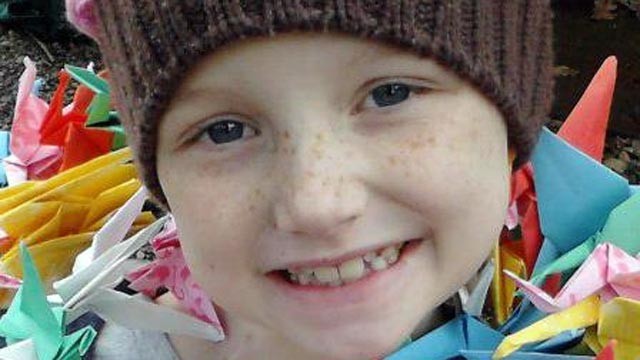
PHOTO: Mykayla Comstock, 7, takes a gram of cannabis oil each day as part of her leukemia treatment.
Courtesy of Erin Purchase
Mykayla Comstock, 7, takes a gram of cannabis... View Full Size
Medical Marijuana for Kids Watch Video
Mykayla first started to feel sick in May, when she developed a rash, cough and night sweats. By mid-July, doctors found a mass in her chest and diagnosed her with T-cell acute lymphoblastic leukemia a few days later. The family relocated from Pendleton, Ore. to Portland to be near Randall Children's Hospital for treatment, which included chemotherapy.
At first, Mykayla wasn't responding well to her treatment, and doctors said she might need a bone marrow transplant. Then she started taking the cannabis oil pills. her mother said. By early August, Mykayla was in remission and the transplant was no longer necessary.
"I don't think it's just a coincidence," Purchase said. "I credit it with helping -- at least helping -- her ridding the cancer from her body."
Before Mykayla was diagnosed, Purchase had read about another young boy with cancer who received cannabis oil for nearly two years because his parents believed it kept him alive so much that they defied doctors' orders and broke Montana law to give it to him. She said she knew it was what she would do for her children if they ever got sick.
Cash "Cashy" Hyde died Nov. 14 at four years old, but his parents say he was never in any pain because of the oil.
Purchase said she, too, uses medical marijuana. She said it has helped with her kidney and liver disease since 2010, adding, "I feel that it saved my life"
However, Dr. Donna Seger, the executive director of the Tennessee Poison Center and a professor at Vanderbilt University, said cannabis has no effect on liver or kidney function, and it does not cure cancer.
"If it does anything, it decreases immunity," she said. "It doesn't fight cancer."
Dr. Igor Grant, who directs the University of California Center for Medical Cannabis Research in San Diego, said he's never studied marijuana's effects on children and it's not clear how the pills will affect Mykayla's development if she takes the drugs daily for a period of months or years.
"It's always a tricky issue prescribing really a medication of any kind to developing organisms because they may be more sensitive to the effects, specifically if the prescription drug has an effect on the brain," Grant said.
He said there have been basic laboratory studies that suggest pot slows cancer cells' ability to change, but those studies are only theoretical. They include no clinical data and or animal data.
The American Academy of Pediatrics opposes treating children with medical marijuana.
"The issue is that marijuana isn't a medicine," Dr. Sharon Levy, of the AAP, told the Oregonian.
Seger said she has several concerns about a 7-year-old taking pills filled with cannabis oil because there is little research on its long-term effects on children. Cannabis could have potentially negative effects on cognitive development in children since it affects cognitive ability in adults.
But Purchase said she wasn't afraid to give her daughter the pills last summer. She was a little nervous about determining the right dose. She and her fiancé, Brandon Krenzler, who helped raise Mykayla since she was 3 years old, started MyKayla with .07-gram doses.
Medical Marijuana for Kids Watch Video
"It took a while to get her adjusted to it," Purchase said. "She acted more funny when she first started taking it and after a while gained tolerance. Now, when she takes it, you can't even tell. She's very normal."
Purchase said she knew she'd done the right thing the day Mykayla missed a dose of her cannabis oil pills and her 17-month old sister walked into a room holding string cheese. The smell made Mykayla so sick that she threw up on the spot.
"She actually asked for her dose," Purchase said, adding that she's less perky without it. "She doesn't use pain pills or nausea pills. She has not even lost a single pound since her diagnosis."
Dr. Michel Dubois, who works in NYU Langone's Pain Management Center, said using cannabis is still controversial because of its side effects and addictive qualities.
"This is a new ethical problem because you've got a medication, which is known to have psychoactive affects, approved by the parents and given to a child," he said, adding that the child doesn't have much choice in the matter. (Psychoactive drugs disrupt communication in the brain and alter normal awareness, behavior and mood, according to the National Institute on Drug Abuse.)
Dubois said it would be better to give a child other drugs for nausea because the cannabis oil likely contains at least 50 or 60 different chemicals with unknown long-term health effects. If Mykayla's life expectancy is limited, her risk of toxicity will also be limited. However, if she is expected to make a full recovery, Dubois said there is a worry that the cannabis will add health problems later on.
He said the cannabis shouldn't be used for more than a month or two.
Although Mykayla's doctors told Purchase she was in remission on Aug. 6 when her blood cell counts returned to normal, Mykayla will undergo two and a half or three more years of chemotherapy so that she can one day be officially cured, Purchase said. That could mean years of more medical marijuana.